

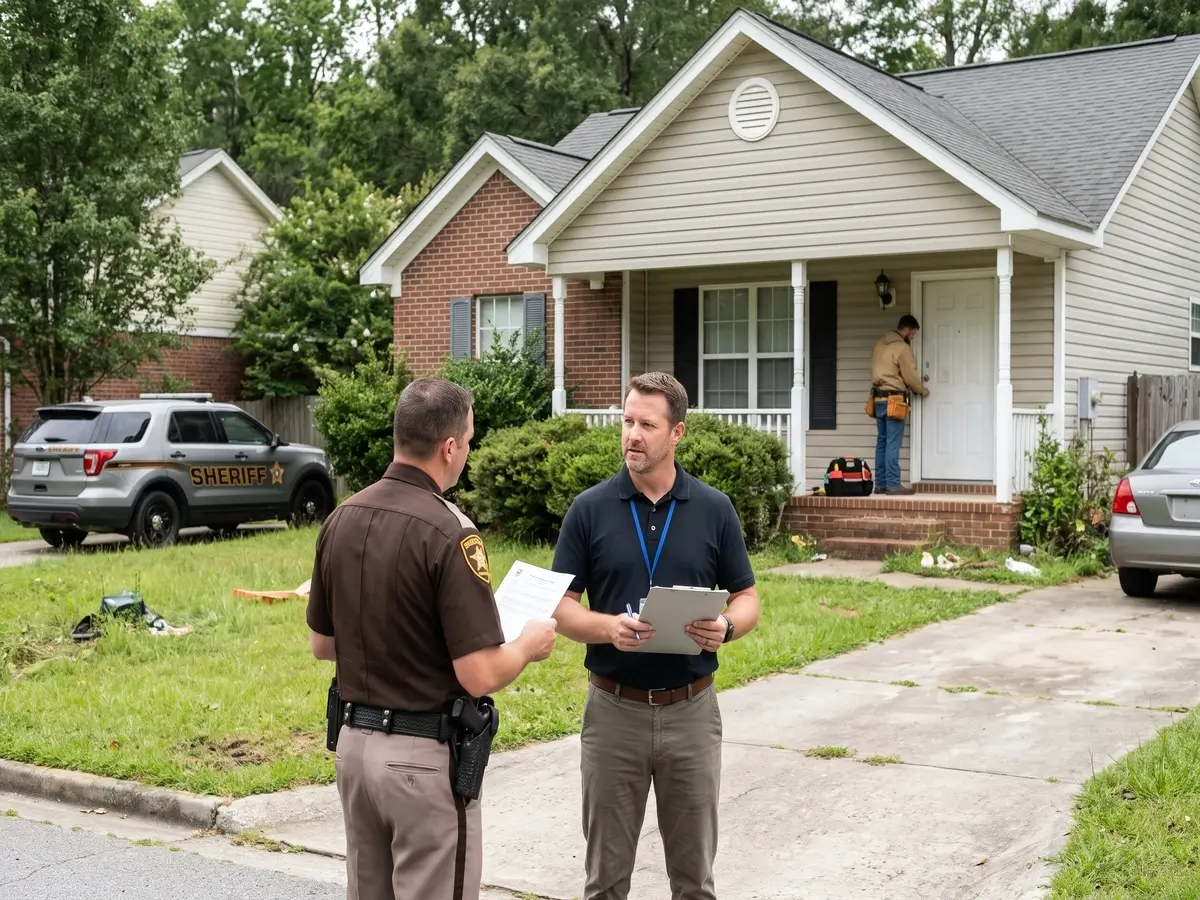
Why Sumter Rental Owners Should Pay Attention to This New Law
Your rental sits empty between tenants. Then a neighbor texts a photo: new curtains, a strange car, and a lock you never installed. Nobody signed a lease agreement. Nobody asked permission.
Until this summer, getting your home back meant a slow ejectment case. That changed June 30, 2026, when Gov. Henry McMaster signed H.3387, now Act No. 252, effective the same day.
The new law creates a separate, expedited court process for removing unlawful occupants from residential property. Its lead sponsor is House Speaker G. Murrell Smith Jr. of Sumter, and it cleared both chambers without a single “no” vote.
Here’s how it works, and where owners can slip up.
South Carolina’s New Squatter Law by the Numbers
Here is what South Carolina rental owners need to know at a glance.
Key Takeaways
- Act No. 252 took effect June 30, 2026, and gives owners a fast-track court remedy for removing squatters from residential property.
- The expedited process applies only to true unlawful occupants, never to current or former tenants.
- A court can issue a removal order immediately, with a hearing held within 24 hours of filing.
- Removing someone without just cause can expose an owner to statutory damages and court costs.
- Regular inspections, listing monitoring, and clean records remain the best defense for vacant rentals.
Squatter or Tenant? Why the Difference Matters
Everything in this law turns on one question: is the person inside a squatter or a tenant?
Under the Act, an unlawful occupant is someone who occupies or trespasses on property with a residential dwelling without the owner's permission, has no legal right to be there, and has none of the protections state law gives tenants.
A tenant is a different story. Anyone with a rental agreement, written or oral, is covered by the South Carolina Residential Landlord and Tenant Act. That includes a tenant who stopped paying rent.
Those cases still go through standard eviction proceedings in magistrate court, starting with proper written notice: generally five days from the due date for unpaid rent and 14 days to cure most other lease violations. Our eviction protection services run that tenant track, while the new law covers the other one.
Signed leases, rent ledgers, and records of a tenant's security deposit show that a landlord tenant relationship exists, or that one never did.
The Nine Things a Petition Must Show
The Act spells out exactly what a verified petition must state, and every item has to be true:
- The petitioner is the property owner or the owner's representative.
- The property includes a residential dwelling.
- The occupants entered and remain on the property.
- The property was not open to the public when they entered.
- They are there without permission and are not guests.
- The owner told them to leave, and they refused.
- The property was not leased, and they are not current or former tenants.
- No occupant is an immediate family member of the owner.
- No litigation over the property is pending between the owner and the occupants.
If any item does not fit, such as a relative who moved in, the expedited process is the wrong tool.
How the Expedited Removal Process Works
Once the facts line up, this process moves faster than anything South Carolina landlords have had before.
The owner, or a person authorized as the owner's representative, files a verified petition with the clerk of court or chief magistrate in the county where the property sits. Filing fees match those for a claim in the court of common pleas.
If the petition shows good cause, the court must immediately issue an ex parte removal order that takes effect when entered. A hearing follows within 24 hours of filing unless good cause supports a delay, and failing to serve the order on the occupants does not undo it.
The county sheriff or a constable then enforces the order and may arrest anyone inside for trespass, warrants, or other legal cause. For a reasonable hourly rate, the officer can stand by while owners change the locks and move the occupants' personal property to or near the property line.
The owner is not liable for damage to those belongings unless the removal was wrongful. After the hearing, the court can also bar the occupant from returning and order them to pay repair, service, and court costs.
New Criminal Penalties for Unlawful Occupants
The Act also adds criminal penalties that give owners and local law enforcement more leverage:
- Intentionally damaging a home while unlawfully occupying it, causing $1,000 or more in damage, is a felony punishable by up to five years in prison.
- Violating an ex parte removal order is a felony carrying up to three years, a fine of up to $3,000, or both.
- Knowingly renting out a property without ownership or a leasehold interest, or listing a home for sale knowing the seller lacks title or authority, is a misdemeanor punishable by up to 30 days, a $1,000 fine, or both.
- Presenting a fake lease or deed to stay on a property is a misdemeanor punishable by up to one year.
That third point matters for vacant rentals, since scammers often "rent" empty homes to people who never suspect the listing is fake.
Mistakes That Can Backfire on Property Owners
A faster process is not a shortcut, and using it the wrong way can turn the owner into the defendant.
Using it against a tenant. The expedited process cannot be used against current or former tenants. Anyone removed without just cause can sue to restore possession and recover actual damages to personal property, $1,000 in statutory damages, and court costs.
Taking matters into your own hands. Self-help is still off the table. If a landlord unlawfully removes or excludes a tenant, or willfully cuts off essential services, the tenant's remedies include recovering possession or ending the lease, plus three months' rent or twice the actual damages, whichever is greater, and reasonable attorney's fees.
Panicking over ownership claims. Squatters sometimes threaten adverse possession, but an adverse possession claim is a separate claim that requires years of open, hostile, and exclusive possession. Keep proof of legal title and paid property taxes on file, and talk with qualified legal counsel before you file anything.
A squatter can now be removed in days, but a tenant still keeps every protection the law promises, and confusing the two is where owners get hurt.
How to Keep Squatters Out of Vacant Rentals
The best squatter case is the one you never have to file.
Sumter homes often sit empty between moves, especially when military tenants end a lease early under the SCRA. Those quiet weeks leave an unoccupied property most exposed.
Inspect a vacant rental property on a set schedule, change locks between tenants, and search rental sites for your address so you can catch fake ads before prospective tenants hand money to a scammer. Smart locks, cameras, and regularly scheduled lawn care make a home look lived in.
Keep deeds, leases, and rent payment histories organized so you can prove your case quickly if you ever need the new process.
Frequently Asked Questions about South Carolina’s New Squatter Law
Here are the questions Sumter owners ask most.
- The Act lets a representative of the property owner file and defines that term to include any authorized agent. Owners should confirm their management agreement grants that authority and speak with a South Carolina attorney about their specific situation.
- Then it may not be a squatter case at all, since the petition must state that the property was not leased to anyone. A genuine lease points to standard eviction, while a fake one is now a crime.
- Yes. A tenant who appeals an eviction can only pause it by filing an affidavit promising to pay rent as it comes due, and a payment more than five days late can end the stay and the possession appeal.
Squatters Out Fast, Tenants Still Protected
South Carolina's new squatter law gives property owners something new: a fast, court-backed way to reclaim a home from people who never had a right to be there. That speed comes with a firm line.
Current and former tenants keep every protection the law promises, and crossing that line costs far more than a vacancy. Clear records and a watchful eye on vacant homes prepare you for either situation.
At Southern Touch Property Management, we make sure your Sumter, Dalzell, Wedgefield, Rembert, or Hopkins rental never looks like an easy target. Through tenant screening, lease documentation, property inspections, and eviction coordination, we keep it occupied, documented, and protected.
Is your vacant Sumter rental watched and protected?
Call us at 803.774.2111 or connect with our team before anyone else tries to claim your home.
Connect with our team